Understanding the Meta Advertising Ecosystem
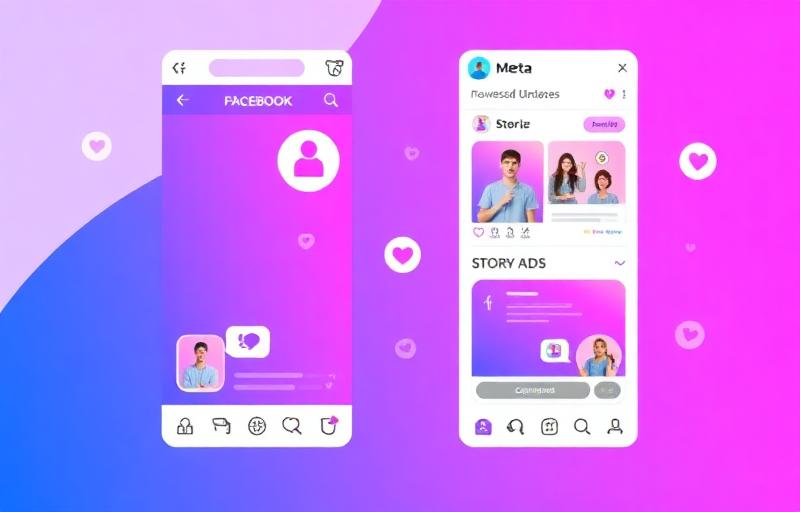
Meta's advertising platform spans Facebook, Instagram, Messenger, and the Audience Network, reaching over 3.05 billion monthly active users across its family of apps. This makes it the largest social media advertising platform in the world.
Unlike Google Ads, where you target people actively searching for something, Meta Ads allow you to target people based on who they are, what they are interested in, and how they behave online. This makes Meta Ads particularly powerful for brand awareness, lead generation, e-commerce, and retargeting.
As a Google-certified Digital Marketing professional with hands-on experience managing Meta Ads campaigns, I have generated thousands of leads and driven significant revenue for clients across diverse industries. This guide shares my complete framework for profitable Meta Ads.
Meta Advertising Ecosystem
Platforms
- Messenger
- Audience Network
Ad Objectives
- Awareness
- Consideration
- Conversion
Targeting
- Demographics
- Interests
- Behaviors
- Custom/Lookalike
Formats
- Image
- Video
- Carousel
- Collection
- Stories
Campaign Objectives and When to Use Each
Choosing the right campaign objective is critical — it determines how Meta's algorithm optimizes your ad delivery.
Campaign Objectives by Funnel Stage
| Funnel Stage | Objective | Best For | Optimize For |
|---|---|---|---|
| Top (Awareness) | Brand Awareness | New brands, product launches | Ad recall lift |
| Top (Awareness) | Reach | Local businesses, announcements | Maximum unique impressions |
| Middle | Traffic | Blog content, landing pages | Link clicks or landing page views |
| Middle | Engagement | Social proof, community | Post interactions |
| Middle | Video Views | Brand storytelling | ThruPlays (15+ seconds) |
| Middle | Lead Generation | B2B, services | Lead form submissions |
| Bottom | Conversions | E-commerce, sign-ups | Purchase or sign-up events |
| Bottom | Catalog Sales | E-commerce with product feed | Dynamic product purchases |
The biggest mistake in Facebook advertising is optimizing for vanity metrics like clicks and impressions. Always optimize for the action closest to revenue — if you want purchases, optimize for purchases, not clicks.
Account Structure and Campaign Setup
A clean, organized account structure makes optimization and scaling significantly easier.
Structure Best Practices:
- Organize campaigns by objective (Prospecting, Retargeting, Retention)
- Use Campaign Budget Optimization (CBO) for letting Meta distribute budget across ad sets
- Keep 3-5 ad sets per campaign maximum
- Run 3-6 ad variations per ad set for testing
- Use clear naming conventions: [Objective]_[Audience]_[Creative Type]_[Date]
- Consolidate similar audiences — too many ad sets fragments learning data
Audience Targeting Mastery
Meta's audience targeting capabilities are among the most sophisticated in digital advertising. Understanding and leveraging these options is the key to profitable campaigns.
Core Targeting Dimensions:
Demographics: Age, gender, education, job title, relationship status, life events, income level
Interests: Pages followed, content engaged with, hobbies, business interests, technology preferences
Behaviors: Purchase behavior, device usage, travel patterns, digital activities
Location: Country, state, city, zip code, radius targeting, people living in/visiting/traveling through
In 2025, Meta's broad targeting with Advantage+ has become surprisingly effective. Start broad and let the algorithm optimize — overly narrow audiences limit Meta's ability to find your best customers.
Custom Audiences and Lookalike Audiences
Custom Audiences
Custom audiences allow you to target people who have already interacted with your business — the warmest and most valuable targeting option.
Custom Audience Sources:
- Website visitors (via Facebook Pixel) — All visitors, specific page visitors, time-based segments
- Customer email/phone lists — Upload your CRM contacts for direct matching
- App users — People who took specific actions in your app
- Video viewers — People who watched 25%, 50%, 75%, or 95% of your videos
- Instagram/Facebook engagement — People who interacted with your content, profile, or ads
Lookalike Audiences
Lookalike audiences find new people who are similar to your best existing customers. They consistently deliver the highest-performing results for both lead generation and e-commerce.
Creating Effective Lookalikes:
- 1Start with a high-quality source audience (purchasers or high-value customers, not just page visitors)
- 2Use 1% Lookalike for highest similarity (smallest but most targeted audience)
- 3Test expanding to 2-3% for more reach while maintaining quality
- 4Layer demographic or interest targeting on top for further refinement
- 5Create separate Lookalikes from different source audiences (purchasers, leads, engagers)
Ad Creative Best Practices
In 2025, creative quality is the single most important factor in Facebook Ads success. With broad targeting and AI-driven optimization, your creative IS your targeting.
Meta's own research shows that creative quality drives 56% of auction outcomes. More than any other factor — targeting, bidding, or budget — your creative determines success or failure.
Creative Best Practices:
- Lead with value — What does the customer get? Show outcomes, not features
- Use social proof — Testimonials, reviews, user-generated content, case study results
- Pattern interrupt — Stop the scroll with bold visuals, unexpected angles, or striking colors
- Mobile-first design — 98% of Meta users access via mobile. Vertical formats (9:16) for Stories/Reels
- Text on images — Keep under 20% of the image area for best delivery
- UGC-style content — Authentic, user-generated content often outperforms polished studio creative
- Video first — Video ads typically get 20-30% lower CPAs than static images
Ad Formats and Placements
Ad Format Comparison
| Format | Best For | Key Specs | Performance |
|---|---|---|---|
| Single Image | Simple offers, testimonials | 1080x1080 or 1200x628 | Reliable baseline |
| Video | Storytelling, demos, UGC | 9:16 (Stories) or 1:1 (Feed) | Highest engagement |
| Carousel | Multiple products, step-by-step | 1080x1080 per card (2-10 cards) | Great for e-commerce |
| Collection | E-commerce catalogs | Cover image/video + product grid | Highest conversion for retail |
| Stories/Reels | Full-screen immersive | 1080x1920 (9:16) | Lowest CPM placements |
| Lead Form | Lead generation | In-app form, no landing page needed | Highest lead volume |
Use Advantage+ Placements (automatic placements) rather than manually selecting placements. Meta's algorithm will optimize delivery across all placements to find the lowest-cost conversions.
Facebook Pixel and Conversion Tracking
The Facebook Pixel and Conversions API (CAPI) are essential for tracking user actions and feeding conversion data back to Meta's algorithm for optimization.
Tracking Setup:
- 1Install the Facebook Pixel base code on all pages of your website
- 2Set up standard events: ViewContent, AddToCart, InitiateCheckout, Purchase, Lead
- 3Implement Conversions API (server-side tracking) to supplement Pixel data lost to iOS privacy changes
- 4Verify events using the Events Manager Test Events tool
- 5Set up custom conversions for specific URL-based actions
- 6Configure the Aggregated Event Measurement priority ranking (8 events per domain)
After iOS 14.5, client-side Pixel tracking alone misses 20-40% of conversions. Implementing Conversions API alongside Pixel is no longer optional — it is essential for accurate data and algorithm optimization.
Retargeting Strategies
Retargeting (showing ads to people who have already interacted with your business) consistently delivers the highest ROAS of any targeting method.
Layer 1: Website Visitors (Warm) — Target people who visited your site in the last 30 days but did not convert. Show testimonials, case studies, and social proof. Goal: Build trust and bring them back.
Layer 2: Engaged Visitors (Warmer) — Target people who visited pricing or service pages in the last 14 days. Show special offers, limited-time discounts, or free consultation offers. Goal: Overcome objections.
Layer 3: Cart Abandoners (Hottest) — For e-commerce: target people who added to cart but did not purchase in the last 7 days. Show dynamic product ads with urgency messaging. Goal: Complete the purchase.
Layer 4: Existing Customers — Target previous purchasers with upsell, cross-sell, and loyalty offers. Goal: Increase customer lifetime value and repeat purchases.
Budget and Bidding
Budget strategy in Facebook Ads requires patience during the learning phase and strategic scaling once you find winners.
Budget Guidelines:
- Start with $10-20 per day per ad set during the testing phase
- Allow each ad set to collect 50 conversions per week to exit the learning phase
- Use Campaign Budget Optimization (CBO) to let Meta distribute spend across ad sets
- Do not change budgets by more than 20% at a time to avoid resetting the learning phase
- Allocate 70% to proven winners, 30% to testing new audiences and creatives
A/B Testing Framework
Systematic testing is the key to continuous improvement. Test one variable at a time for clear, actionable results.
Testing Priority Order:
- 1Creative (images/videos) — The highest-impact variable, test first
- 2Audience segments — Test different Lookalikes, interests, and broad targeting
- 3Ad copy and headlines — Test different hooks, angles, and CTAs
- 4Placements — Usually leave on automatic, but test Stories-only vs. Feed-only
- 5Landing pages — Test different page designs, offers, and CTAs
A/B Testing Rules:
Test one variable at a time for clear results
Run tests for at least 3-5 days with sufficient budget per variant
Need at least 100 conversions per variant for statistical significance
Kill clear losers early (after 2-3 days) to save budget
Document all tests and results for institutional learning
Scaling Profitable Campaigns
Once you find winning ad sets, scaling requires a methodical approach to avoid breaking what works.
Scaling Methods:
- Vertical scaling — Increase budget gradually (15-20% every 3-4 days) to avoid resetting learning
- Horizontal scaling — Duplicate winning ad sets with new Lookalike audiences or geographic targets
- Creative scaling — Create variations of winning creatives (different hooks, angles, formats)
- Geographic scaling — Expand winning campaigns to new countries or regions
- Monitor frequency — When frequency exceeds 3, creative fatigue is likely. Refresh creative
- Watch for declining ROAS as you scale — establish minimum ROAS thresholds and pause below them
Facebook Ads for Lead Generation
Lead generation is one of Meta's strongest use cases, especially for B2B and service businesses.
Lead Gen Best Practices:
- Use Lead Form ads for highest volume (forms stay within Facebook/Instagram)
- Use Conversion ads to landing pages for highest quality leads
- Offer genuine value — free guides, audits, consultations, webinars
- Keep lead forms short — name, email, and one qualifying question
- Set up instant follow-up via email or CRM integration (speed to lead matters)
- Use 'Higher Intent' form setting to add a review step and improve lead quality
Facebook Ads for E-Commerce
E-commerce advertisers have unique opportunities with Meta's catalog-based ad formats.
E-Commerce Strategies:
- Set up your Product Catalog and connect it to Meta via the Commerce Manager
- Use Dynamic Product Ads (DPA) for retargeting — automatically shows products users viewed
- Advantage+ Shopping Campaigns leverage AI for automated optimization across the catalog
- Use Carousel format to showcase multiple products or product features
- Collection ads with Instant Experience create full-screen mobile shopping experiences
- Segment campaigns by product category, price point, or margin for better budget allocation
Facebook Ads vs. Google Ads
Platform Comparison
| Factor | Facebook/Meta Ads | Google Ads |
|---|---|---|
| Targeting | Interest-based, demographic | Search intent-based |
| User Intent | Passive (interruption marketing) | Active (searching for solutions) |
| Best For | Awareness, discovery, social proof | Capturing existing demand |
| Ad Formats | Visual (images, videos, carousels) | Text (search), visual (display) |
| Funnel Stage | Top and middle of funnel | Middle and bottom of funnel |
| Average CPC | $0.50 - $3.00 | $1.00 - $50.00+ |
| Learning Curve | Moderate | Steep |
| Best Audiences | B2C, lifestyle, e-commerce | B2B, services, high-intent |
My recommendation: Use both platforms together. Facebook Ads for awareness and lead generation at the top of the funnel, Google Ads for capturing high-intent searches at the bottom. This full-funnel approach maximizes total conversions.
Common Facebook Ads Mistakes
Facebook Ads Mistakes to Avoid
| Mistake | Impact | Fix |
|---|---|---|
| Too many ad sets, too little budget | Spreads budget too thin | Consolidate to 3-5 ad sets |
| Not testing creative variations | Missing the #1 performance lever | Test 3-6 creatives per ad set |
| Targeting too narrow | Limits Meta's optimization | Start broad, let algorithm optimize |
| Ignoring learning phase | Inconsistent performance | Wait for 50 conversions before changing |
| No Conversions API | Losing 20-40% tracking data | Implement CAPI alongside Pixel |
| Measuring by clicks not conversions | Optimizing wrong metric | Focus on CPA and ROAS |
| No clear funnel | Low conversion rate | Build landing pages for each campaign |
FAQ
Start with $10-20 per day per ad set during the testing phase. Once you identify winning ads and audiences, scale gradually. Most small businesses see meaningful results with $500-2,000 per month.
The learning phase typically requires 50 conversions per week per ad set. During this phase (usually 3-7 days), performance may be inconsistent. Stable results usually appear within 2-3 weeks.
Absolutely. Despite rising costs and privacy changes, Facebook Ads remain one of the most cost-effective advertising platforms when properly managed. The key is strong creative, precise targeting, and continuous optimization.
📚 Continue Reading
Written by

Noman Hassan
SEO Expert & Web Developer
Google-certified SEO strategist with 50+ projects delivered across 15+ countries. Specializing in technical SEO, content strategy & web development.