What Is a Digital Marketing Strategy
A digital marketing strategy is a comprehensive plan that outlines how a business will use online channels and tools to achieve its marketing objectives. It is not a collection of random tactics — it is a unified, coordinated blueprint that aligns every digital activity with specific business goals.
A well-crafted digital marketing strategy answers five fundamental questions: Where are we now? Where do we want to be? Who are we trying to reach? How will we get there? How will we know we have arrived?
The difference between businesses that thrive online and those that struggle is almost always the presence (or absence) of a clear, documented strategy. According to CoSchedule research, marketers with a documented strategy are 313 percent more likely to report success than those without one.
313% — Marketers with a documented strategy are 313% more likely to report success than those without one (CoSchedule Research).
As a Google-certified Digital Marketing professional with a Professional Diploma in Digital Marketing from UniAthena and certifications spanning SEO, advertising, data science, and email marketing, I have developed and executed digital marketing strategies for businesses across multiple industries and markets. In this guide, I am sharing the complete framework I use to build strategies that deliver measurable results.
Why You Need a Documented Strategy
Many businesses engage in digital marketing activities without a documented strategy. They post on social media sporadically, run occasional ads, and publish content without a clear plan. This approach wastes time, money, and opportunity.
The Problems With Not Having a Strategy
- 1Wasted Budget — Without clear goals and channel alignment, marketing spend is distributed based on guesswork. I have audited accounts where 40-60% of ad spend was wasted on wrong keywords, audiences, or channels.
- 2Inconsistent Messaging — Your website says one thing, your social media says another, and your ads say something else entirely. This confuses potential customers and weakens your brand.
- 3Missed Opportunities — Without audience research and competitive analysis, you miss channels, keywords, and content opportunities that your competitors are capitalizing on.
- 4Inability to Measure Success — Without defined KPIs, you cannot objectively measure whether your marketing efforts are working. Vanity metrics replace meaningful metrics.
- 5No Scalability — Without documented processes and strategies, you cannot effectively scale your marketing or delegate to a team.
The Benefits of a Documented Strategy
- Clear direction for all marketing activities
- Efficient budget allocation based on data
- Consistent brand messaging across all channels
- Measurable goals and accountability
- Ability to identify what works and what does not
- Scalable processes that can be delegated
- Alignment between marketing and business objectives
The Digital Marketing Strategy Framework
I use a 12-step framework to build comprehensive digital marketing strategies. This framework is adaptable to businesses of any size and in any industry.
12-Step Digital Marketing Framework
Strategy Framework
- 1. Goals & KPIs
- 2. Audience Research
- 3. Competitor Analysis
- 4. Channel Selection
- 5. SEO Strategy
- 6. Content Marketing
Execution
- 7. Paid Advertising
- 8. Social Media
- 9. Email Marketing
- 10. CRO
Measurement
- 11. Analytics
- 12. Budget Allocation
Step 1: Business Goals and KPI Definition
Define SMART goals that directly support your overall business objectives. Every goal should be Specific, Measurable, Achievable, Relevant, and Time-bound.
Example Goals & KPIs
| Business Objective | Marketing Goal | KPI | Timeline |
|---|---|---|---|
| Increase revenue by 30% | Generate 200 qualified leads/month | MQLs per month | 6 months |
| Build brand authority | Reach 50,000 monthly organic visitors | Organic traffic | 12 months |
| Reduce acquisition cost | Lower CPA to $25 | Cost per acquisition | 3 months |
| Improve retention | Achieve 30% email open rate | Email engagement | 6 months |
| Expand to new market | Rank top 5 for 20 local keywords | Keyword rankings | 6 months |
KPI Hierarchy
Primary KPIs (Business Impact): Revenue from digital channels, ROAS, Customer Acquisition Cost, Customer Lifetime Value, Qualified leads generated.
Secondary KPIs (Channel Performance): Organic traffic, Keyword rankings, Conversion rate, Email subscribers, Social engagement.
Tertiary KPIs (Activity Metrics): Content published, Backlinks acquired, Email campaigns sent, Social posts published.
Focus your reporting on primary KPIs. Secondary and tertiary KPIs are important for optimization but should not be confused with actual business outcomes.
Step 2: Target Audience Research
Understanding your target audience is the foundation of every marketing decision. Without deep audience knowledge, your messaging, channel selection, and content strategy will be based on assumptions rather than data.
Buyer Persona Template
Name: Marketing Manager Maria
Age: 32-45 | Job Title: Marketing Manager/Director
Company Size: 10-200 employees | Industry: SaaS, E-Commerce, Professional Services
Goals: Increase organic traffic, prove marketing ROI, build scalable content system
Challenges: Limited budget, can't justify SEO investment without proven ROI, overwhelmed by technical complexity
Preferred Content: Case studies with numbers, step-by-step guides, data-driven reports
Where They Research: Google, LinkedIn, Industry blogs, Podcasts, YouTube
Audience Research Methods
- 1Interview existing clients — Ask about their challenges, goals, and decision-making process
- 2Survey your email list — Use Google Forms or Typeform to gather insights at scale
- 3Analyze website data — Google Analytics reveals demographics, interests, and behavior patterns
- 4Study social media analytics — Platform insights show audience demographics and engagement
- 5Review support and sales data — Common questions and objections reveal audience needs
- 6Competitor audience analysis — Use SEMrush or SparkToro to analyze competitor audiences
- 7Keyword research — Search queries reveal exactly what your audience is looking for
Step 3: Competitor Analysis
Understanding your competitive landscape helps you identify opportunities, avoid saturated approaches, and develop a differentiated strategy.
Three Types of Competitors
- Direct competitors — Businesses offering the same services to the same audience
- Indirect competitors — Businesses offering alternative solutions to the same problem
- SEO competitors — Websites ranking for your target keywords (may not be business competitors)
What to Analyze
Competitor Analysis Checklist
| Area | What to Check | Tools |
|---|---|---|
| Website & SEO | Domain Rating, organic traffic, top keywords, backlink profile | Ahrefs, SEMrush |
| Paid Ads | Active campaigns, keywords bid on, ad copy, landing pages | SEMrush, Meta Ad Library |
| Social Media | Platforms, posting frequency, engagement, follower growth | Native analytics |
| Content | Blog frequency, formats, top-performing topics, lead magnets | BuzzSumo, Ahrefs |
| Newsletter presence, frequency, lead magnets offered | Subscribe and analyze |
My competitive advantage includes certifications from Google, Ahrefs, HubSpot, UC Davis, Cisco, and BrightLocal, combined with hands-on experience across multiple markets and Vibe Coding capabilities. This combination is rare in the market.
Step 4: Channel Selection
Not every channel is right for every business. Channel selection should be based on where your audience spends time, what your goals are, and what resources you have.
Channel Selection Matrix
| Channel | Best For | Investment | Time to Results |
|---|---|---|---|
| SEO | Long-term organic traffic, authority building | Medium-High | 3-12 months |
| Google Ads | Immediate traffic, high-intent leads | High (ad spend) | Days-weeks |
| Facebook/Meta Ads | Brand awareness, lead generation | Medium (ad spend) | Weeks |
| Content Marketing | Authority building, organic traffic | Medium (time) | 3-6 months |
| Email Marketing | Retention, nurturing, repeat sales | Low-Medium | Weeks |
| B2B lead gen, thought leadership | Low-Medium | 1-3 months | |
| YouTube | Brand building, tutorials, engagement | High (production) | 3-12 months |
$36 for every $1 spent — Email marketing delivers the highest ROI of any digital marketing channel.
Recommended Starting Stack for Most Businesses:
1. SEO (always — it is the foundation of digital visibility)
2. Google Ads (for immediate lead generation while SEO builds)
3. Content Marketing (fuels SEO and builds authority)
4. Email Marketing (highest ROI channel)
5. One social media platform (where your audience is most active)
Step 5: SEO Strategy Integration
SEO should be the backbone of your digital marketing strategy. It drives the highest quality traffic at the lowest long-term cost.
SEO Strategy Components
Technical SEO
- Page Speed
- Core Web Vitals
- Crawlability
- Schema Markup
- HTTPS
On-Page SEO
- Title Tags
- Meta Descriptions
- Headers
- Content Quality
- Internal Links
Content Strategy
- Topical Map
- Content Calendar
- Pillar Content
- Content Refreshes
Off-Page SEO
- Guest Posting
- Digital PR
- Resource Links
- Competitor Analysis
Local SEO
- GBP Optimization
- Citations
- Reviews
- Local Content
Step 6: Content Marketing Strategy
Content marketing is the fuel that powers SEO, social media, email marketing, and paid advertising. A documented content strategy ensures consistent, purposeful content creation.
Content Calendar Example
Monthly Content Calendar
| Week | Blog Post | Social Media Theme | Video | |
|---|---|---|---|---|
| Week 1 | On-Page SEO Guide | SEO Tips Series | Newsletter | YouTube Tutorial |
| Week 2 | Keyword Research Guide | Tool Reviews | Case Study Email | LinkedIn Video |
| Week 3 | Technical SEO Audit | Client Success Stories | Tips Email | Instagram Reel |
| Week 4 | Link Building Guide | Industry News | Promo Email | YouTube Tutorial |
Content Distribution Checklist
- Share on all relevant social media platforms
- Send to your email list
- Repurpose into different formats
- Syndicate on Medium and LinkedIn
- Promote through paid amplification when warranted
- Submit to industry newsletters and curations
Step 7: Paid Advertising Strategy
Paid advertising provides immediate visibility while organic strategies build over time. The key is integrating paid and organic efforts for maximum synergy.
Budget Allocation for Paid Ads
Recommended Paid Ad Budget Split:
50% Google Ads — Search campaigns for high-intent keywords
30% Facebook/Meta Ads — Lead generation and remarketing
20% Retargeting — Across platforms
Adjust based on performance data after 2-3 months.
Step 8: Social Media Strategy
Social media supports your digital marketing strategy by building brand awareness, engaging with your audience, and driving traffic to your content.
Posting Frequency Recommendations
| Platform | Minimum | Optimal | Maximum |
|---|---|---|---|
| 3x/week | 5x/week | 1-2x/day | |
| 3x/week | 5x/week + daily Stories | 2x/day | |
| 3x/week | 5x/week | 1x/day | |
| Twitter/X | 1x/day | 3-5x/day | 10x/day |
| YouTube | 1x/week | 2x/week | 3x/week |
Follow the 80/20 rule: 80% value content (tips, insights, education, entertainment) and 20% promotional content (services, offers, calls-to-action).
Step 9: Email Marketing Strategy
Email marketing consistently delivers the highest ROI of any digital marketing channel — an average of $36 for every $1 spent. Yet many businesses underutilize it.
Welcome Sequence Blueprint
- 1Email 1 (Immediate): Welcome + deliver the promised lead magnet
- 2Email 2 (Day 2): Introduce yourself and your expertise
- 3Email 3 (Day 4): Share your best content and resources
- 4Email 4 (Day 7): Share a case study or success story
- 5Email 5 (Day 10): Soft introduction of your services
Segmentation Criteria
- How they subscribed (which lead magnet)
- What pages they visited on your site
- Their industry or company size
- Their engagement level (opens, clicks)
- Their stage in the buyer journey
Step 10: Conversion Rate Optimization
Driving traffic is only half the equation. CRO ensures that traffic converts into leads and customers.
Quick CRO Wins
- Add social proof (testimonials, logos, review scores) above the fold
- Reduce form fields to the minimum necessary
- Add a clear, specific CTA above the fold
- Improve page speed — every second of delay reduces conversions by 7%
- Add trust signals (certifications, security badges, guarantees)
- Use action-oriented CTA text ('Get Your Free Audit' instead of 'Submit')
7% — Every additional second of page load time reduces conversions by 7 percent.
The Full-Funnel Digital Marketing Approach
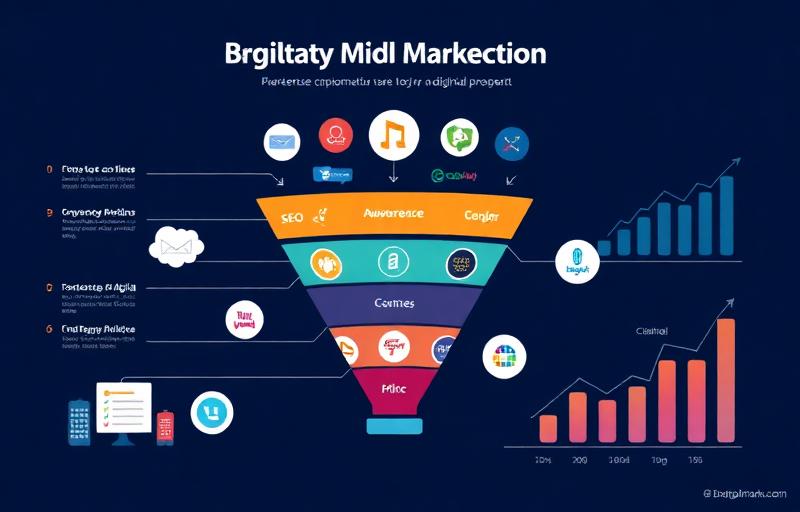
Full-Funnel Marketing Strategy
Awareness (TOFU)
- SEO Blog Content
- Social Media
- Facebook Ads
- YouTube Videos
- Podcast Appearances
Consideration (MOFU)
- Case Studies
- Comparison Posts
- Webinars
- Google Ads
- Email Nurturing
Decision (BOFU)
- Pricing Pages
- Free Consultation
- Retargeting
- Client Success Stories
- Proposals
Retention
- Onboarding Emails
- Progress Reports
- Upsell Offers
- Loyalty Programs
- Referral Incentives
Building a 12-Month Digital Marketing Plan
Month 1-3: Foundation Phase
- Complete website audit and fix technical issues
- Set up Google Analytics 4 and Google Search Console
- Install Facebook Pixel and conversion tracking
- Publish first 5-8 pillar blog posts
- Optimize Google Business Profile (if local)
- Set up email marketing platform and welcome sequence
- Launch initial Google Ads campaigns for immediate leads
- Establish social media presence on 1-2 platforms
Month 4-6: Growth Phase
- Continue publishing 4-8 blog posts per month
- Begin link building campaign (5-10 links per month)
- Optimize Google Ads based on 3 months of data
- Launch Facebook Ads for lead generation
- Grow email list to 500+ subscribers
- Create 2-3 lead magnets
- Implement retargeting campaigns
Month 7-9: Scale Phase
- Scale content production based on performance
- Increase link building to 10-15 links per month
- Scale profitable ad campaigns
- Implement advanced email sequences
- Launch video content strategy
- Optimize conversion rate on key pages
Month 10-12: Optimize & Expand
- Comprehensive strategy review and adjustment
- Refresh and update top-performing content
- Explore additional channels based on data
- Develop advanced remarketing sequences
- Create annual content report and ROI analysis
- Plan next year's strategy based on learnings
Digital Marketing Tools Stack
Recommended Tool Stack
| Category | Tool | Purpose | Cost |
|---|---|---|---|
| SEO | Ahrefs | Keyword research, backlinks, site audit | $99-999/mo |
| SEO | Google Search Console | Search performance monitoring | Free |
| Analytics | Google Analytics 4 | Traffic and conversion tracking | Free |
| PPC | Google Ads | Search and display advertising | Ad spend |
| Social Ads | Meta Business Suite | Facebook/Instagram ads | Ad spend |
| Mailchimp / ConvertKit | Email marketing and automation | Free-$300/mo | |
| Content | Surfer SEO | Content optimization and scoring | $89-219/mo |
| Technical | Screaming Frog | Site crawling and audits | Free-$259/yr |
| Social | Buffer / Hootsuite | Social media scheduling | Free-$99/mo |
| Speed | GTmetrix + PageSpeed Insights | Performance testing | Free |
| Design | Canva | Graphics and social images | Free-$120/yr |
| CRM | HubSpot | Contact management and sales | Free-$800/mo |
| Heatmaps | Hotjar | User behavior analysis | Free-$80/mo |
Common Strategic Mistakes
- 1No Clear Goals — Marketing without defined goals is like driving without a destination. Define SMART goals before executing any tactics.
- 2Trying to Be Everywhere — Spreading efforts across too many channels with insufficient resources leads to mediocre results everywhere. Master 2-3 channels first.
- 3Ignoring SEO — Relying entirely on paid advertising means traffic stops when ad spend stops. SEO provides a sustainable, compounding asset.
- 4No Content Strategy — Random content wastes time and confuses your audience. Every piece should serve a purpose within your funnel.
- 5Neglecting Email Marketing — Many businesses collect emails and never use them. Email has the highest ROI of any channel.
- 6Not Tracking ROI — If you cannot attribute revenue to specific activities, you cannot optimize spending. Implement proper tracking from day one.
- 7Focusing on Vanity Metrics — Followers, page views, and impressions feel good but do not pay bills. Focus on leads, conversions, and revenue.
- 8Inconsistency — Publishing 2 posts per week for a year beats publishing 20 in one month and stopping.
- 9Not Adapting — Strategies that worked two years ago may not work today. Stay updated, test new approaches, and pivot.
- 10DIY Everything — Trying to do everything yourself leads to burnout. Invest in expert help for areas outside your expertise.
FAQ
Most businesses should allocate 7-15% of revenue to marketing, with 50-70% of the marketing budget going to digital channels. For startups or growth-stage businesses, this may be 15-25%. The exact amount depends on your industry, competition, goals, and market position.
SEO is the most important long-term channel because it provides compounding returns — content created today can drive traffic for years. For immediate results, Google Ads is most impactful. The best strategy combines both.
Google Ads can generate leads within days. Social media shows engagement within weeks. SEO typically takes 3-6 months. Email marketing shows results within weeks. A comprehensive strategy shows compounding results at the 6-12 month mark.
For small businesses, a specialist freelancer or consultant offers the best value — expert strategy and execution without agency overhead. For medium to large businesses, combining in-house team members with specialist consultants often works best.
Start with: 1) Google Ads for immediate leads, 2) SEO for long-term growth, 3) Email marketing for highest ROI and nurturing, 4) One social media platform for brand building. Then expand based on results and resources.
📚 Continue Reading
Related Guides
On-Page SEO: The Definitive Guide to Rank #1 in 2025
25 min read
Keyword Research: The Ultimate Masterclass for SEO in 2025
22 min read
Technical SEO Audit: The Complete Step-by-Step Guide [2025]
25 min read
Core Web Vitals & Page Speed: The Ultimate Optimization Guide
25 min read
Link Building Strategies: 21 Proven Techniques to Build Authority
28 min read
Guest Posting: The Complete Guide to Earning Quality Backlinks
22 min read
Local SEO: The Complete Guide to Dominating Local Search in 2025
30 min read
Google Business Profile Optimization: Complete Guide to Rank in Map Pack
25 min read
Google Ads Mastery: The Complete Guide to PPC Success in 2025
28 min read
Facebook & Meta Ads: The Complete Guide to Profitable Campaigns
24 min read
Content Writing for SEO: How to Write Content That Ranks #1 in 2025
22 min read
International SEO: The Complete Guide to Global Rankings (2025)
25 min read
Written by

Noman Hassan
SEO Expert & Web Developer
Google-certified SEO strategist with 50+ projects delivered across 15+ countries. Specializing in technical SEO, content strategy & web development.
![Technical SEO Audit: The Complete Step-by-Step Guide [2025]](/images/blog/technical-seo.jpg)