What Is Local SEO
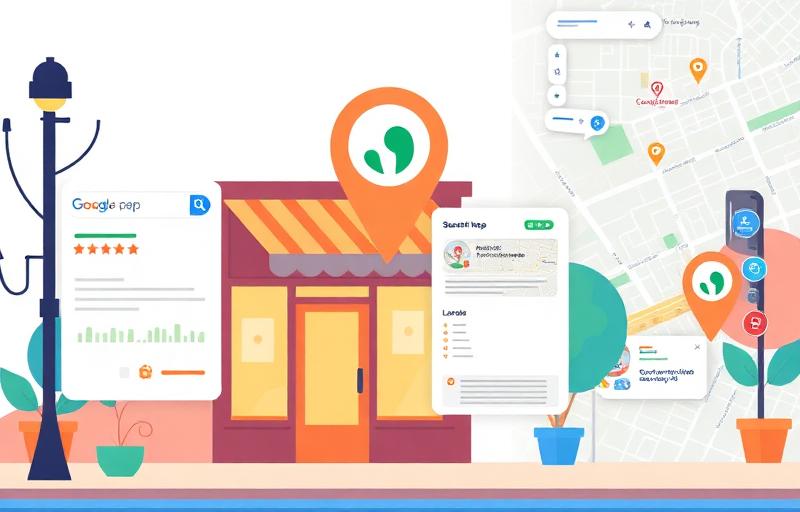
Local SEO is the practice of optimizing your online presence to attract more business from relevant local searches. These searches happen on Google and other search engines when someone looks for a product or service near their physical location.
When someone searches "SEO expert near me," "best restaurant in [city]," or "plumber open now," Google delivers local results that include the Map Pack (the top 3 local business listings with a map) and localized organic results.
Local SEO is fundamentally different from traditional SEO because it involves an additional set of ranking factors, including your Google Business Profile, local citations, reviews, and geographic signals.
As a BrightLocal certified Local SEO specialist with a Google Digital Marketing certification, I have helped dozens of local businesses achieve Map Pack rankings and dramatically increase their local leads. In this guide, I am sharing my complete local SEO framework.
Local SEO vs. Traditional SEO
Key Differences
| Factor | Traditional SEO | Local SEO |
|---|---|---|
| Primary Goal | Rank nationally/internationally | Rank in local search & Map Pack |
| Key Platform | Google organic results | Google Business Profile + Maps |
| Keyword Focus | Industry terms | Industry terms + location modifiers |
| Citations | Less important | Critical (NAP consistency) |
| Reviews | Nice to have | Critical ranking factor |
| Link Building | Authority from any relevant site | Focus on local & regional links |
| Content | Topic-focused | Location & community-focused |
| Competitors | National/global businesses | Local businesses in your area |
Local search results typically appear in two formats: the Map Pack (top 3 local listings with a map, above organic results) and localized organic results. To dominate local search, you need to optimize for both.
Google's Local Ranking Factors
Google's Local Ranking Algorithm
Relevance
- GBP categories
- Business description
- Services listed
- Website content
Distance
- Physical location
- Service area settings
- Searcher location
- Address accuracy
Prominence
- Review quality & quantity
- Backlink profile
- Citation consistency
- Brand mentions
- Engagement signals
All Local Ranking Signals (roughly in order of importance):
- 1Google Business Profile signals — categories, completeness, keywords in title, posts
- 2Review signals — quantity, velocity, diversity, response rate
- 3On-page signals — NAP on website, local keywords, location pages
- 4Citation signals — consistency, volume, quality of citation sources
- 5Link signals — domain authority, local link relevance
- 6Behavioral signals — CTR, mobile clicks-to-call, direction requests
- 7Personalization signals — searcher history and preferences
Google Business Profile Optimization
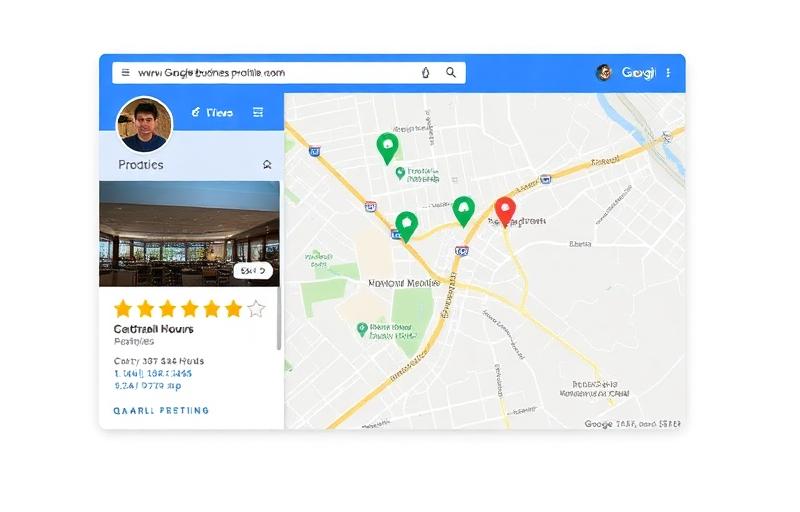
Your Google Business Profile is the single most important factor in local SEO. A fully optimized GBP can mean the difference between appearing in the Map Pack and being invisible.
Google states that businesses with photos receive 42% more requests for directions and 35% more clicks to their websites.
Complete GBP Optimization Checklist:
- 1Business Name — Use exact legal business name. No keyword stuffing (violates guidelines and can cause suspension).
- 2Primary & Secondary Categories — Choose the most specific primary category. Add all relevant secondary categories.
- 3Business Description — Write a compelling 750-character description with primary keywords naturally included.
- 4Services and Products — Add all services with detailed descriptions. Include keywords naturally.
- 5Attributes — Fill in all applicable attributes (online appointments, accessibility, etc.).
- 6Photos and Videos — Upload logo, cover photo, interior/exterior, team, services. Add videos under 30 seconds.
- 7Business Hours — Keep accurate and up to date, including holiday hours.
- 8Phone Number and Website — Use a local phone number. Ensure website URL uses HTTPS.
- 9Posts — Publish regularly: updates, offers, events, product highlights.
- 10Q&A — Monitor, respond, and pre-populate with common questions.
- 11Messaging — Enable to allow direct contact through your GBP listing.
NAP Consistency and Local Citations
NAP stands for Name, Address, and Phone Number. Consistency across every mention of your business online is one of the most important local SEO factors.
When Google finds consistent NAP information across dozens of trusted sources, it gains confidence that your business information is accurate. Inconsistent information creates confusion and can hurt your rankings.
Citation Building Strategy:
- 1Start with major data aggregators — Foursquare, Data Axle, Localeze (these feed hundreds of smaller directories).
- 2Submit to top universal directories — Google Business Profile, Apple Maps, Bing Places, Yelp, Facebook, Yellow Pages, BBB.
- 3Submit to industry-specific directories — Clutch, UpCity, Agency Spotter, DesignRush (for marketing/SEO).
- 4Submit to local directories — Chamber of Commerce, local business associations, city-specific directories.
- 5Audit existing citations — Use BrightLocal, Moz Local, or Yext to find and fix inconsistent citations.
NAP Format Standard — Choose one exact format and use it everywhere:
Noman Hassan Digital Marketing
123 Main Street, Suite 400
Lahore, Punjab 54000
+92 300 000 0000
Do not vary between "St." and "Street," "Ste." and "Suite," or different phone number formats.
Local Keyword Research
Local keyword research focuses on identifying search terms with geographic modifiers or implicit local intent.
Types of Local Keywords
| Type | Example | Intent Level |
|---|---|---|
| Explicit location | [service] in [city] | High |
| Near me | [service] near me | Very High |
| Brand + location | [brand] [city] | High |
| Long-tail local | best affordable [service] in [city] | Very High |
| Implicit local | plumber open now | High |
Tools for Local Keyword Research:
- Google's autocomplete suggestions for local variations
- Google Keyword Planner with location targeting
- Ahrefs with keyword difficulty for local terms
- Google Trends with geographic filtering
On-Page Optimization for Local SEO
Optimize Your Pages for Local Search:
- Include city and state in title tags and meta descriptions
- Create dedicated location pages for each area you serve (unique content, not copy-paste)
- Embed a Google Map on your contact/location page
- Add your NAP in the footer of every page
- Create locally relevant content — local guides, community involvement, events
- Optimize images with local alt text and geo-tagged filenames
- Implement LocalBusiness schema markup
Review Management Strategy
93% of consumers say online reviews impact their purchasing decisions. Businesses with 4.0+ stars receive 12x more conversions than businesses below 4.0.
My Review Generation Framework:
- 1Ask at the Right Moment — Request reviews when customers are most satisfied, immediately after a successful project or positive interaction.
- 2Make It Easy — Create a direct review link. Share via email follow-up, SMS, QR code on printed materials, or a button on your website.
- 3Respond to Every Review — Positive reviews with gratitude. Negative reviews professionally, acknowledging concerns and offering resolution.
- 4Diversify Platforms — Google (most important), Facebook, Yelp, industry-specific platforms, Trustpilot.
- 5Never Buy or Fake Reviews — Violates Google's terms, can result in GBP suspension, easily detected by algorithms.
Local Link Building
Local Link Building Strategies:
- Sponsor local events, charities, and sports teams
- Join local business associations and chambers of commerce
- Partner with complementary local businesses for cross-promotion
- Create local resource guides that community sites want to link to
- Get featured in local news outlets and media
- Host or participate in community events and workshops
- Offer scholarships to local schools or universities
Local Content Strategy
Creating locally-focused content helps establish topical and geographic relevance. This signals to Google that your business is an active, authoritative presence in your community.
Local Content Ideas:
- Neighborhood guides and area spotlights
- Local event coverage and community involvement
- Local industry news and analysis
- Customer success stories from local businesses
- "Best of" lists for your city/region
- Seasonal tips relevant to your local area
Mobile Optimization for Local Search
Most local searches happen on mobile devices. Your website must provide an excellent mobile experience to convert local searchers into customers.
- Click-to-call phone numbers
- One-tap directions via Google Maps integration
- Mobile-responsive design with fast load times
- Easy-to-use contact forms optimized for mobile input
- Prominent display of hours and location information
- Mobile-friendly menus and service listings
Local Schema Markup
Structured data helps search engines understand your business details and can enhance your search appearance with rich snippets.
Essential Local Schema Types:
LocalBusiness (or specific subtypes: Restaurant, Dentist, etc.)
PostalAddress — precise location data
OpeningHoursSpecification — business hours
AggregateRating — review scores
GeoCoordinates — exact map positioning
Service — for each service you offer
sameAs — social media profile links
Google Maps Optimization
Google Maps is a primary discovery platform for local businesses. Optimization involves ensuring your GBP is complete, photos are high-quality and geo-tagged, your business description contains relevant keywords, and you encourage check-ins and reviews from customers.
Tracking Local SEO Performance
Key Local SEO Metrics
| Metric | Tool | Frequency |
|---|---|---|
| Map Pack rankings | BrightLocal / Ahrefs | Weekly |
| GBP insights (views, clicks, calls) | Google Business Profile | Monthly |
| Local organic traffic | Google Analytics | Monthly |
| Review quantity & rating | GBP + review platforms | Weekly |
| Citation consistency score | BrightLocal / Moz Local | Monthly |
| Local keyword rankings | Ahrefs rank tracker | Weekly |
| Conversion rate from local pages | Google Analytics | Monthly |
Local SEO for Multi-Location Businesses
- Create unique landing pages for each location with distinct content
- Set up separate Google Business Profiles for each physical location
- Use location-specific schema markup on each page
- Build citations and reviews for each individual location
- Avoid duplicate content — each location page should have unique descriptions
- Implement a hub-and-spoke URL structure: /locations/city-name/
Common Local SEO Mistakes
- Keyword stuffing the GBP business name
- Inconsistent NAP information across the web
- Ignoring or not responding to reviews
- Using a virtual office address for GBP
- Duplicate GBP listings for the same location
- Not creating location-specific pages (generic service pages)
- Neglecting mobile optimization
- Not building local links (focusing only on national links)
Local SEO Case Study
Client: Home services business (plumbing) in a major US city. Challenge: Not appearing in Map Pack for any target keywords.
Month 1: Foundation — Fully optimized Google Business Profile. Fixed 47 inconsistent citations. Added LocalBusiness schema. Created 5 location-specific service pages.
Month 2: Reviews & Content — Implemented review generation system (gained 35 new reviews). Published 4 locally-focused blog posts. Started weekly GBP posts. Responded to all existing reviews.
Month 3: Links & Authority — Acquired 12 local backlinks (Chamber of Commerce, local blogs, partnerships). Created neighborhood guide resource page. Submitted to 30 industry-specific directories.
Month 4: Optimization & Refinement — A/B tested GBP description and categories. Continued review generation (20 more reviews). Published 4 more blog posts. Added 40+ high-quality photos.
Results: Map Pack #1 for primary keyword. Top 3 for 8 secondary keywords. 312% increase in GBP views. 247% increase in direction requests. 189% increase in phone calls.
FAQ
Most local SEO campaigns show measurable improvements within 3-6 months. GBP optimizations can impact rankings within weeks, while citation building and review generation take 2-4 months to fully impact rankings.
For the Map Pack, you need either a physical location customers can visit or a defined service area. Service-area businesses can hide their address but still rank in the Map Pack for their service areas.
Reviews are one of the top 3 local ranking factors. Both the quantity and quality of reviews matter. Aim for a steady stream of authentic reviews and respond to every one — Google has confirmed that response rate impacts rankings.
It is very difficult to rank in the Map Pack for a city where you don't have a physical presence. Google heavily weighs proximity. For service-area businesses, define your service areas in GBP, but your primary city ranking will always be strongest.
📚 Continue Reading
Written by

Noman Hassan
SEO Expert & Web Developer
Google-certified SEO strategist with 50+ projects delivered across 15+ countries. Specializing in technical SEO, content strategy & web development.